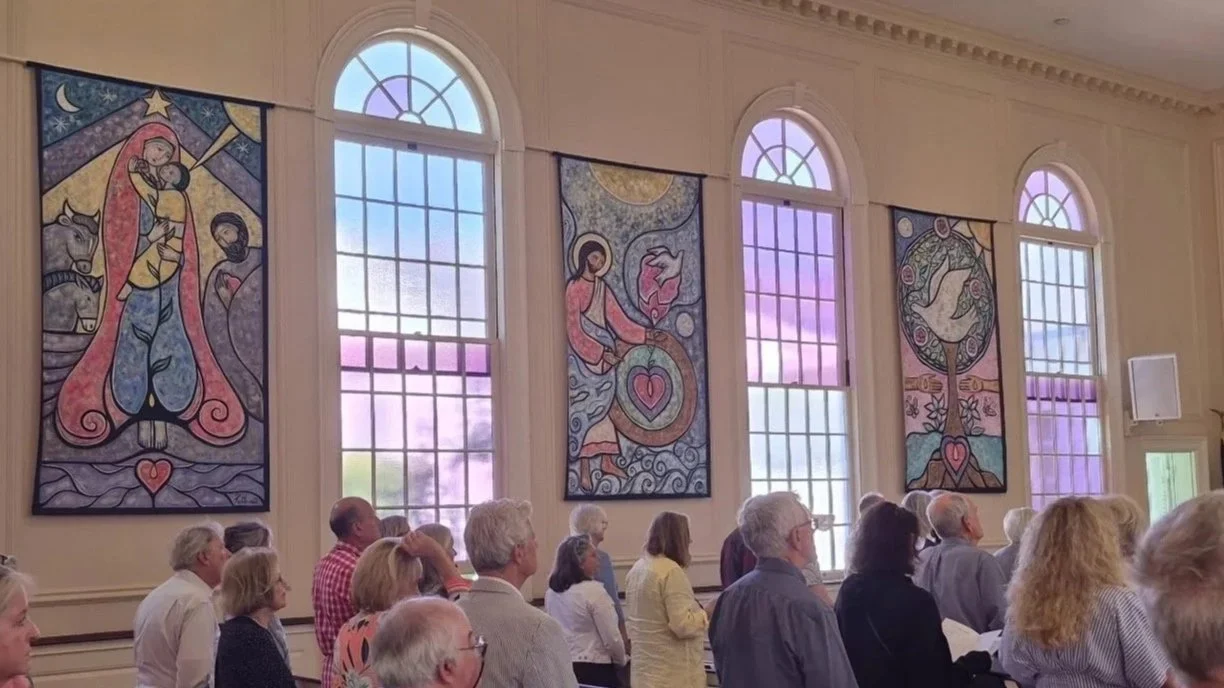
In fall 2025, I was commissioned by First Congregational Church in Camden to create a series of seven panels celebrating their liturgical year. The project draws inspiration from the rich visual language of Byzantine iconography and from the stained glass windows and sacred icons I encountered in churches, cathedrals, and museums throughout Europe. The seven month projected was completed in June 2026.
Often described as "windows into eternity," icons are not simply works of art but visual invitations to contemplation. Rather than existing as ends in themselves, they point beyond the material image toward a larger, cosmic mystery of relationship between the human and the divine. Inspired by this tradition, each banner uses symbolism, color, and form to reflect a season of the Christian liturgical calendar, inviting viewers into reflection while celebrating the rhythms of worship, faith, and the sacred year.
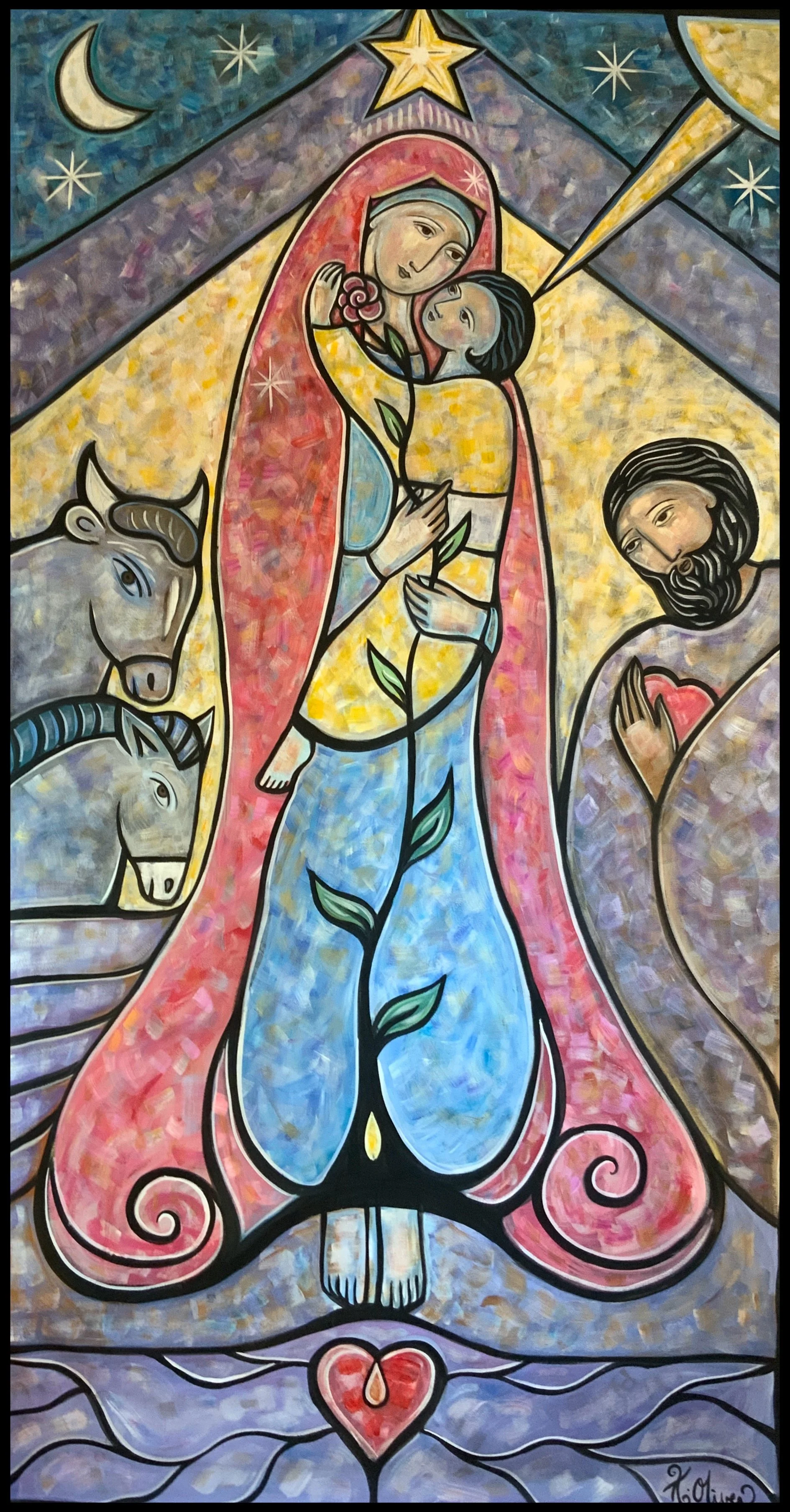
Advent/Christmas
Drawing on the early iconographic traditions of the Hodegetria (She Who Shows the Way) and Eleousa (Loving Kindness) icon types, Mary both points to Christ and holds him close, revealing that the One who is the Way comes to us in the tenderness and intimacy of the Incarnation.
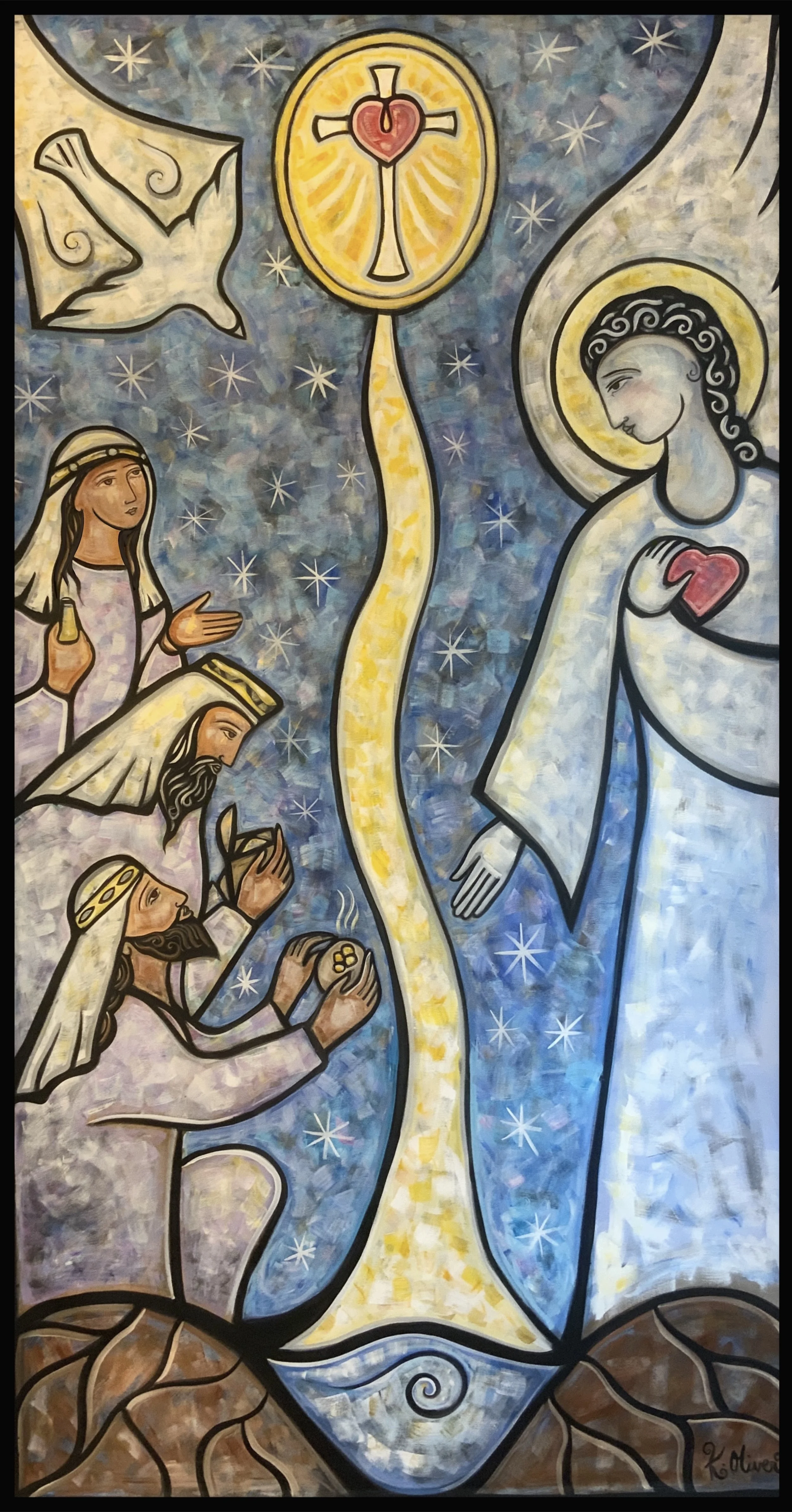
Epiphany/Theophany
The Magi bring gifts of gold, frankincense, and myrrh, guided by an angel. Light pours into the waters, uniting revelation and gift. Christ’s Baptism is included: the cross is present in the waters, and the Holy Spirit descends as a dove.
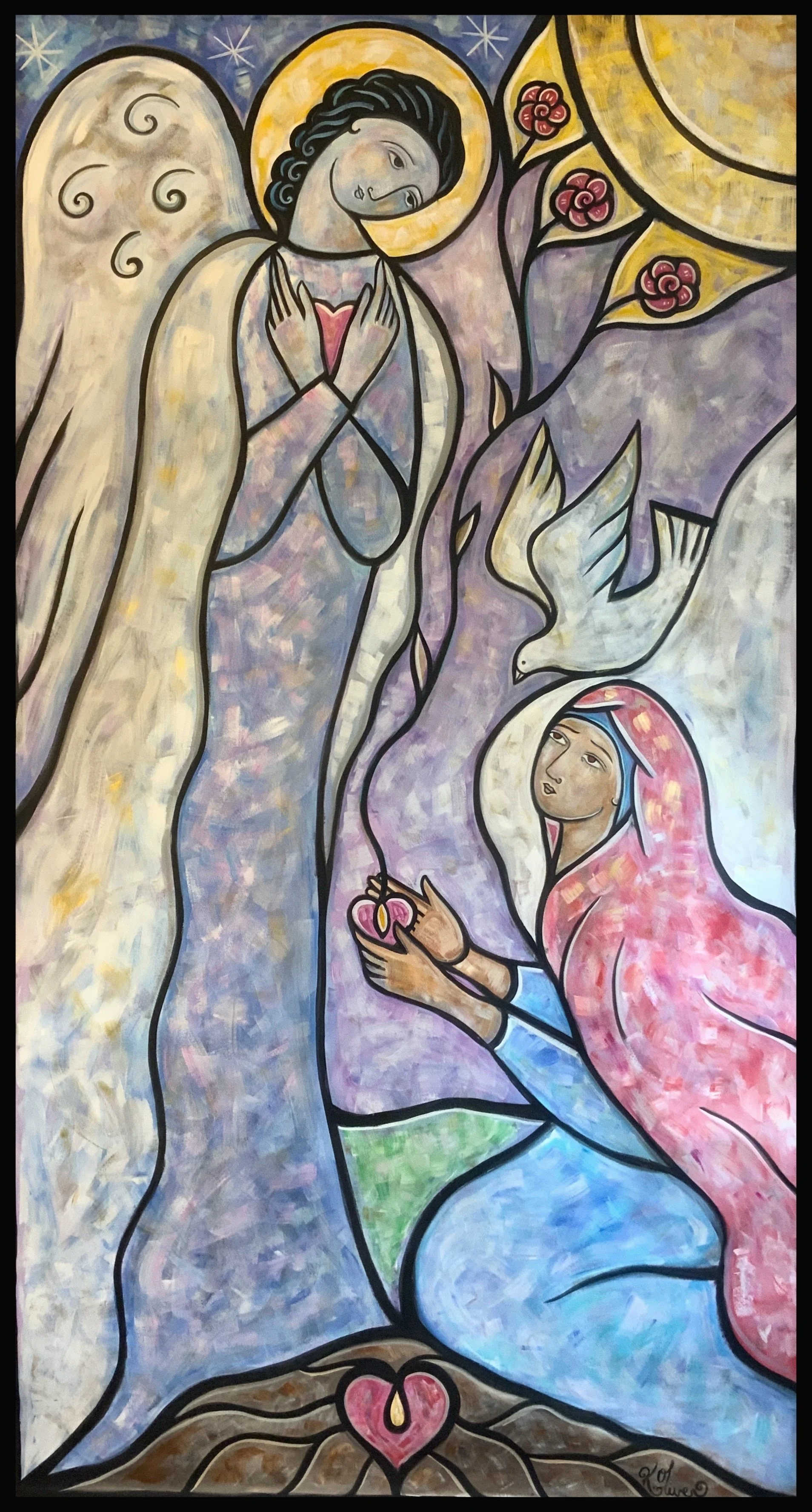
Lent/Annunciation
Set within Lent (March 25th), the Annunciation holds sorrow and promise together. The angel’s words, “Fear not,” open the world to the Incarnation. Mary’s “yes” becomes the turning point where divine life is welcomed into the world. Her gesture of humility also serves as a guide for the Lenten season.
Easter
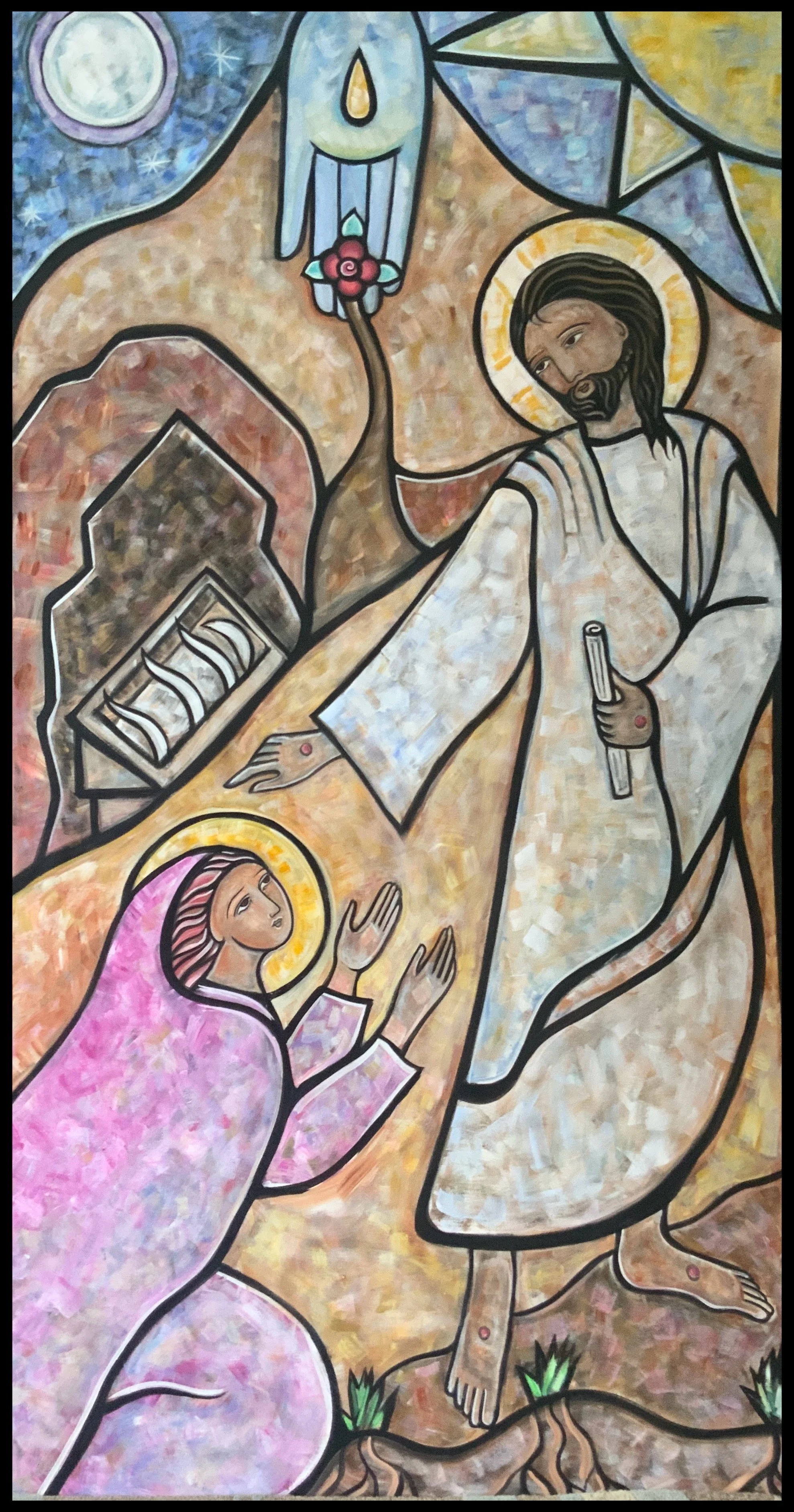
Inspired by the traditional Noli Me Tangere ("Touch Me Not") icon, the risen Christ finds Mary Magdalene weeping in the garden. She mistakes him for the gardener until he calls her by name.
Reaching out to him, she hears the words, "Do not hold on to me." These words are not a rejection, but an invitation for Mary to discover the Resurrection as a living, personal, and relational reality. In this awakening, she is sent forth to share this new vision with others.
Pentecost
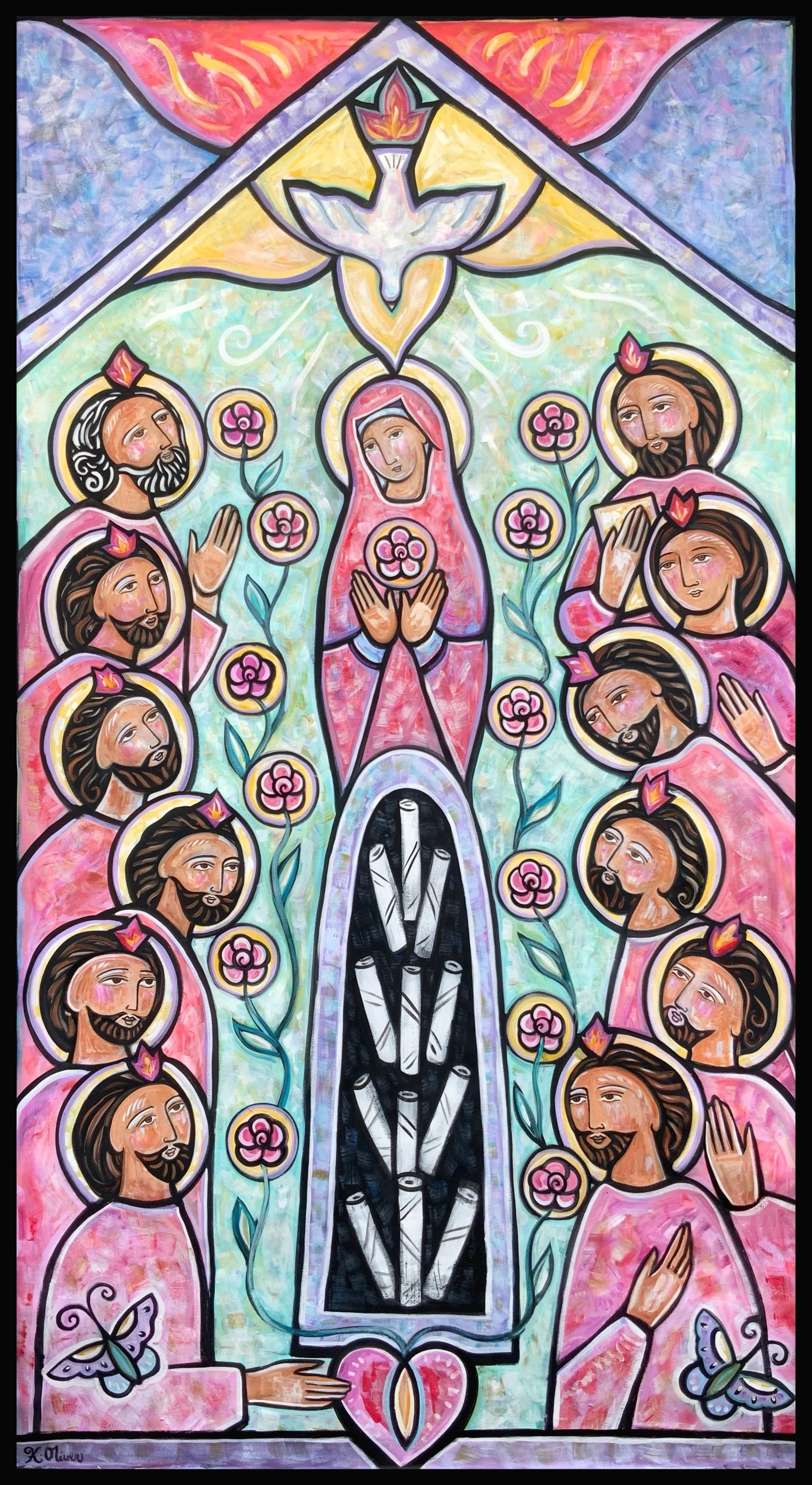
The Holy Spirit descends as a dove upon the Apostles, uniting diverse peoples and gifts in harmony without erasing their differences. Pentecost is the divine answer to the Tower of Babel: where human pride scattered humanity into many languages, the Spirit gathers every nation, tribe, and tongue into one communion. Unity comes not through power or conformity, but through love, inspiration, and the flourishing of each unique gift in service to the whole.
Mary, the Mother of Christ, sits at the center in the teacher's seat, embodying wisdom and faithful receptivity. The twelve tongues of fire represent inspired speech; scrolls in the dark doorway symbolize the Gospel teaching that brings light to the world; roses evoke creation renewed; and the soaring architecture redeems the Tower of Babel, revealing the Church as the new spiritual temple. The image reveals the mystery of Pentecost: true unity is found not in becoming the same, but in offering each person's sacred gift in communion with all.
Christ creating the world
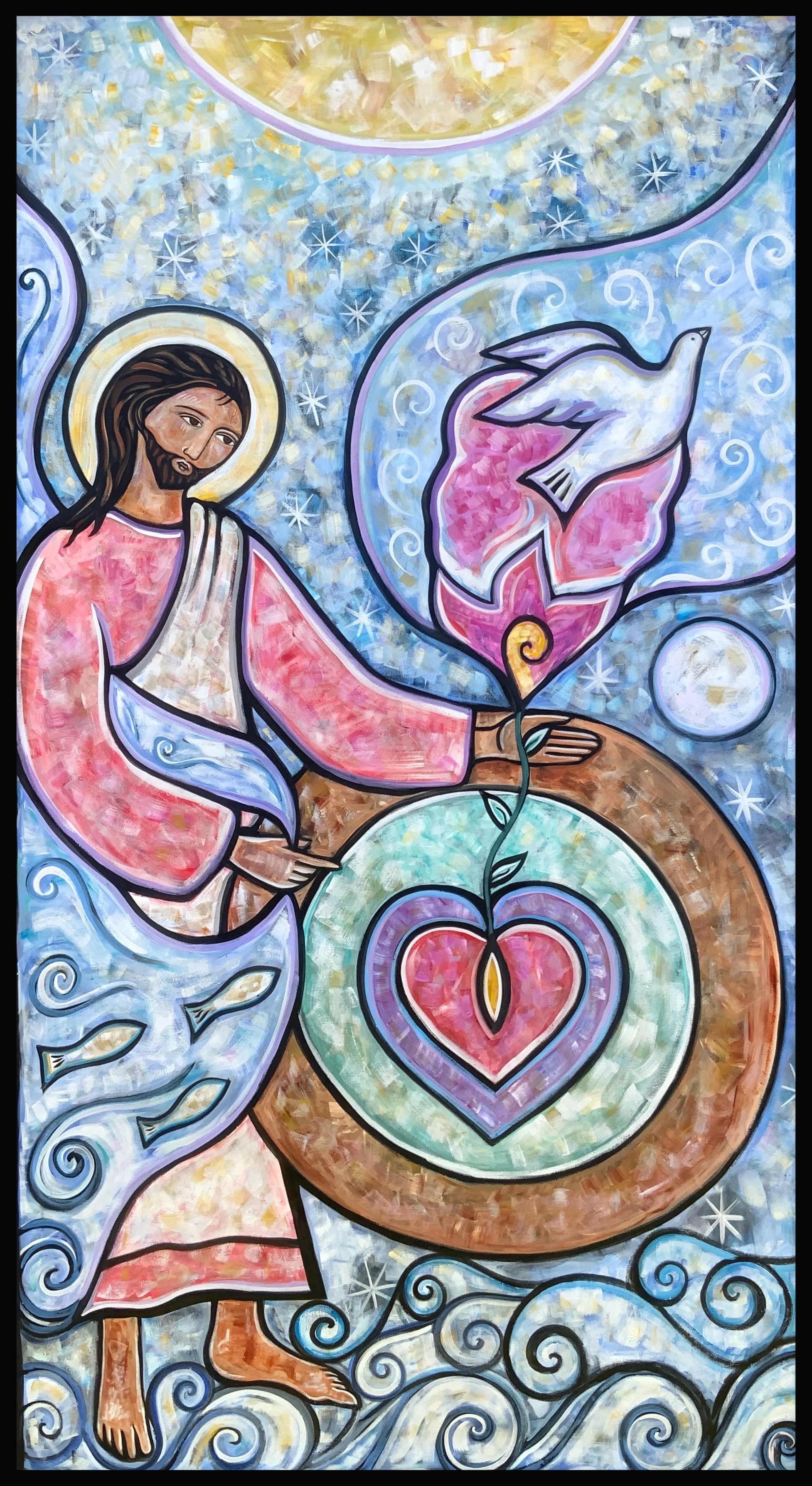
Christ is shown as the eternal Word through whom all things are made. Creation is a living mystery, continually brought forth and sustained by divine love. The Holy Spirit is present within this unfolding, renewing the world and drawing all things toward their fullness.
Tree Of Life
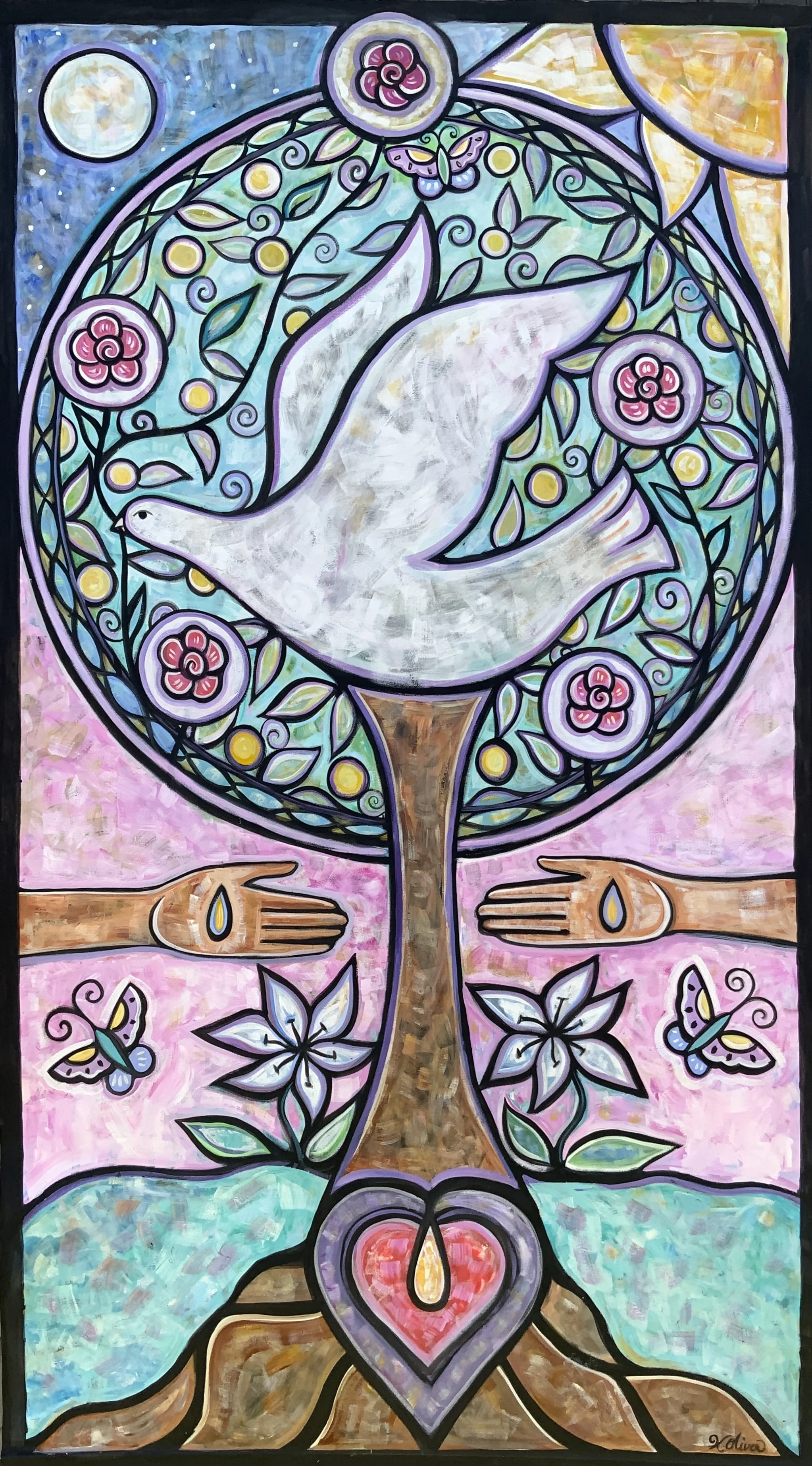
The Holy Dove rests within the fruiting Tree of Life. Human hands sow seeds, signifying humanity’s participation in divine creativity. Creation is revealed as a living abundance—given, received, and renewed through an ongoing communion with the Spirit.
Commodo cursus magna, vel scelerisque nisl consectetur et. Donec id elit non mi porta gravida at eget metus.