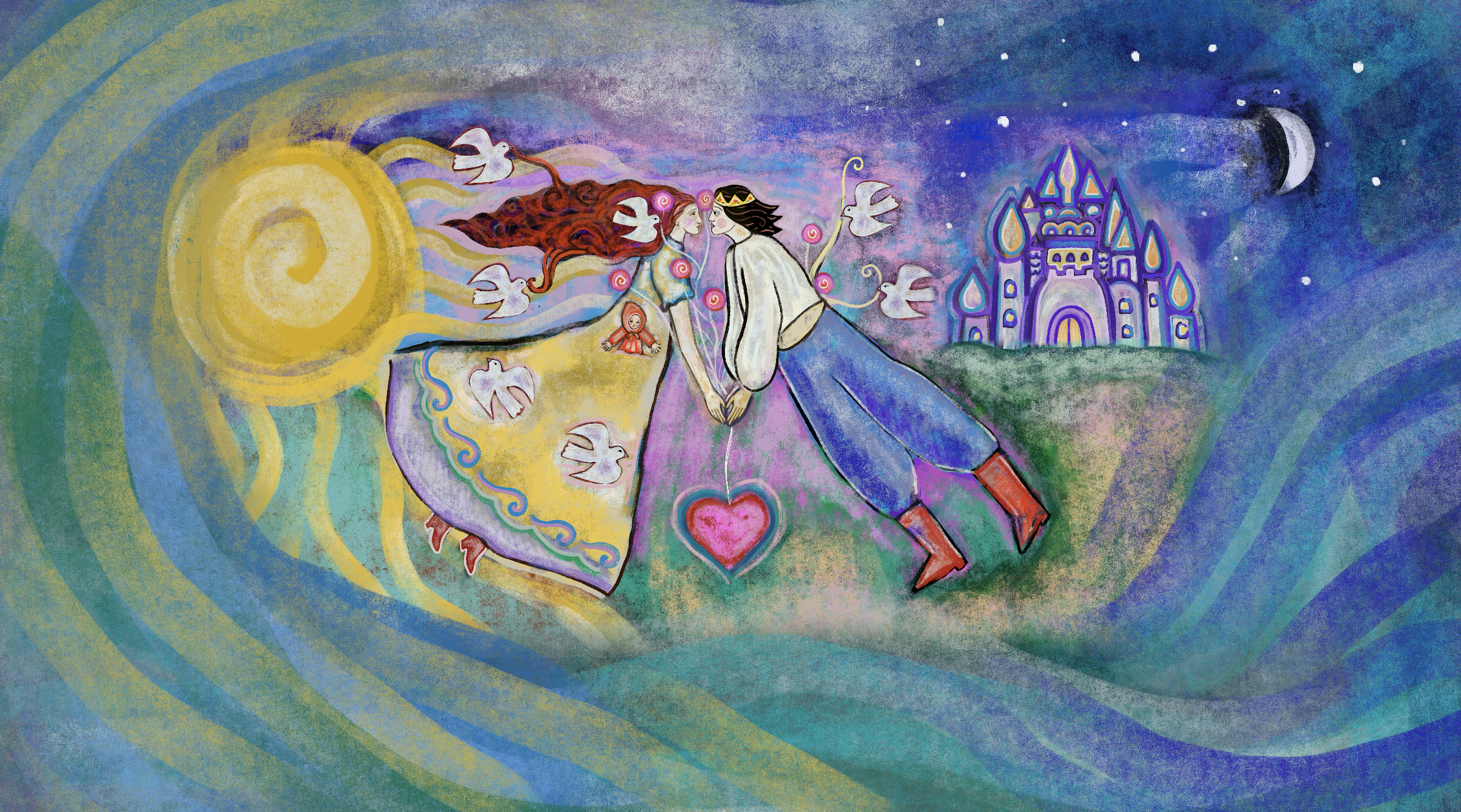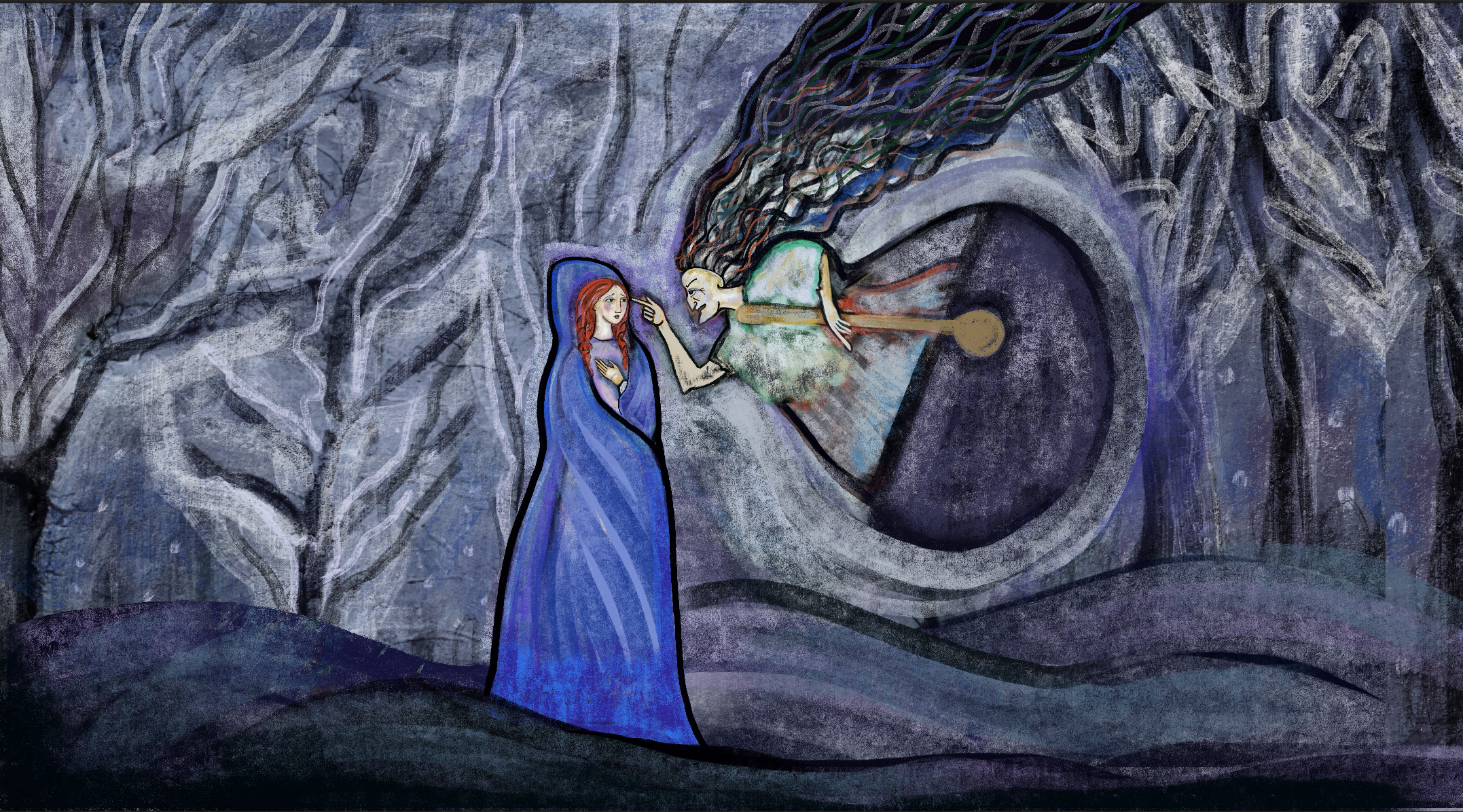
Vasilisa the Beautiful and Baba Yaga
“The child intuitively comprehends that although these stories are unreal, they are not untrue.”
— Bruno Bettelheim, The Uses of Enchantment: The Meaning and Importance of Fairy Tales
“Some day you will be old enough to start reading fairy tales again.”
— C. S. Lewis, On Three Ways of Writing for Children
“Children’s souls require fairy tales just as the body requires physical nourishment.”
— Rudolf Steiner
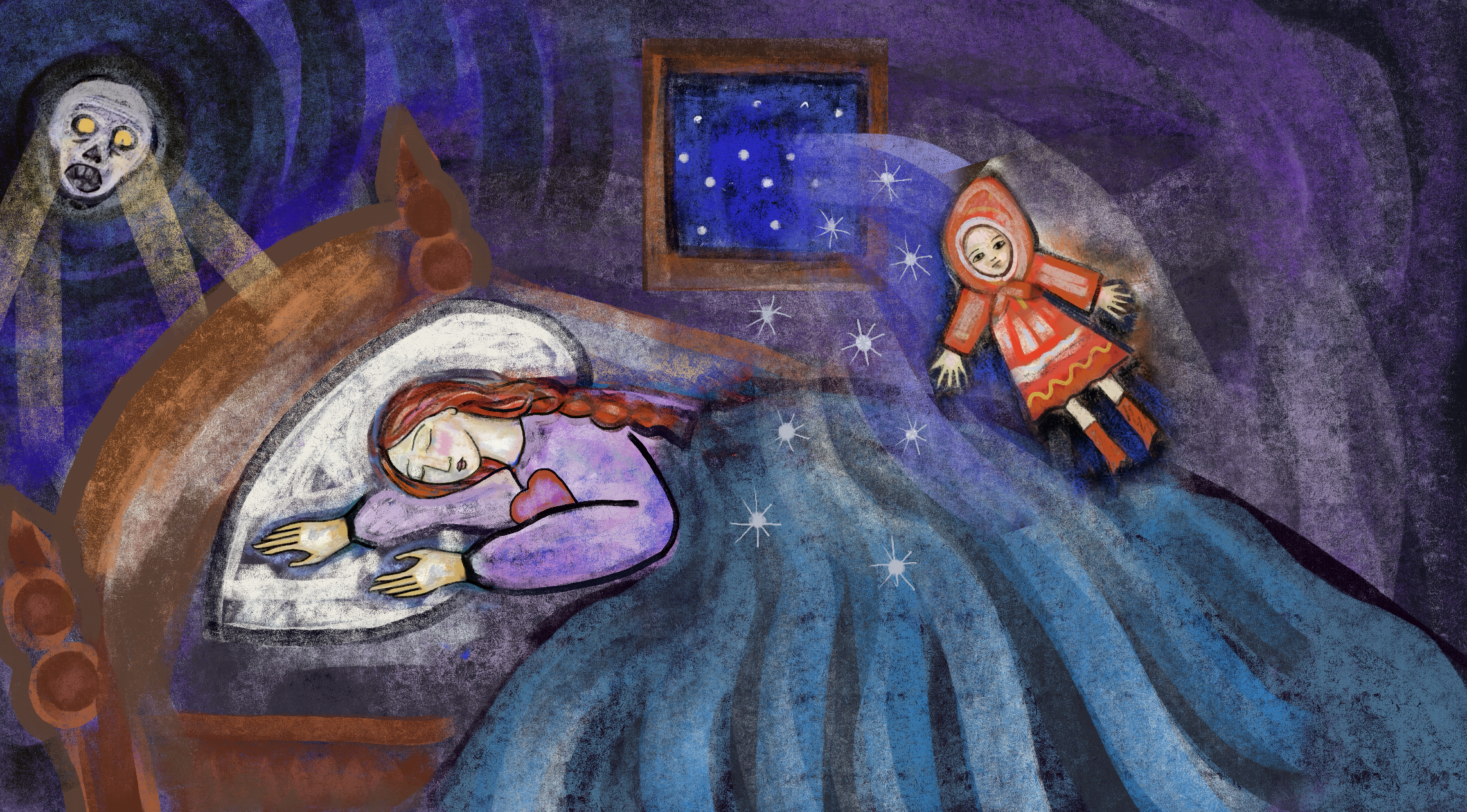
Fairytales aren’t just for children
Fairy tales belong not only to children, but to the child and the elder within each of us. They meet us differently as we move through life. Their enduring gift is not the promise that life is easy, but the conviction that transformation is possible.
I began reading fairy tales to my son when he attended a Waldorf kindergarten, where I first encountered the profound medicine these stories carry. Through that experience, a door opened into a lifelong exploration of myth, symbol, and the wisdom held within traditional tales.
Through impossible tasks, betrayel and journeys of uncertainty, these stories reveal that the way forward requires perseverance, humility, discernment, and openness to unexpected help and wisdom beyond what is immediately visible.
The Story of Vasilisa
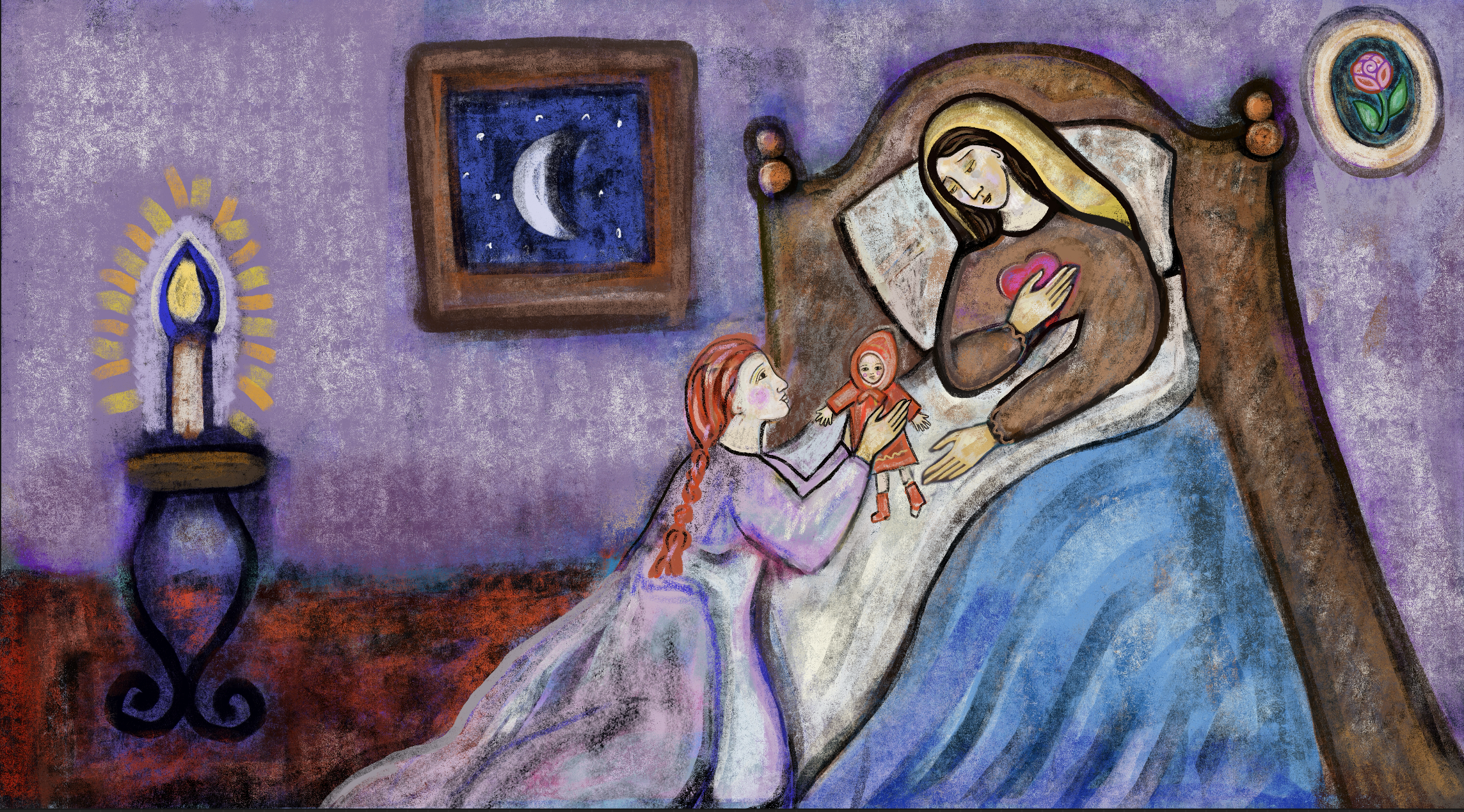
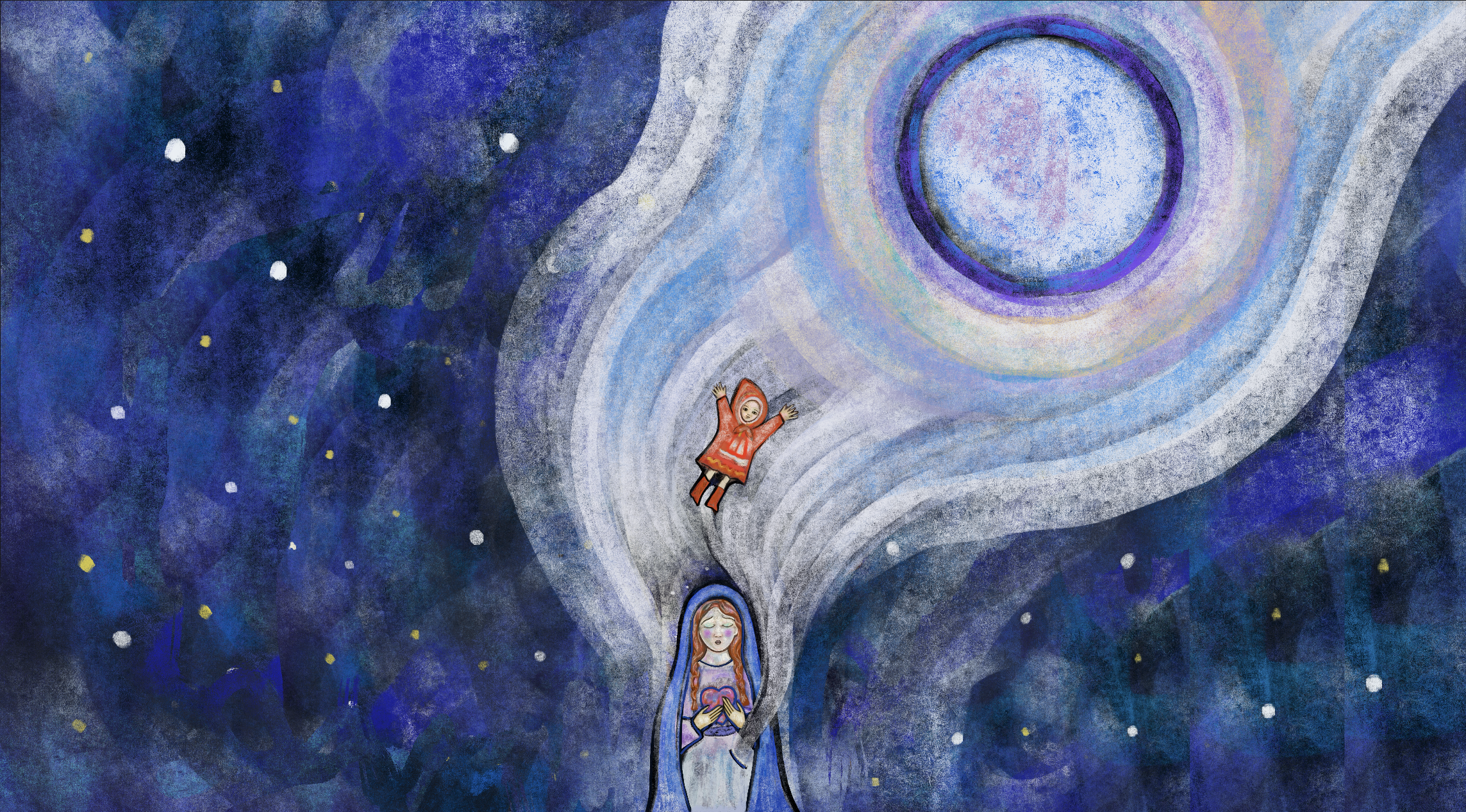
After the death of her beloved mother and the suffering that follows, Vasilisa is sent into the deep forest to face Baba Yaga and complete a series of impossible tasks. Guided by the small doll her mother gives her—a symbol of love, intuition, and inner wisdom—Vasilisa learns the art of discernment: when to act, when to listen, when to wait, and how to recognize the guidance that arrives in unexpected forms.
Information and Wisdom
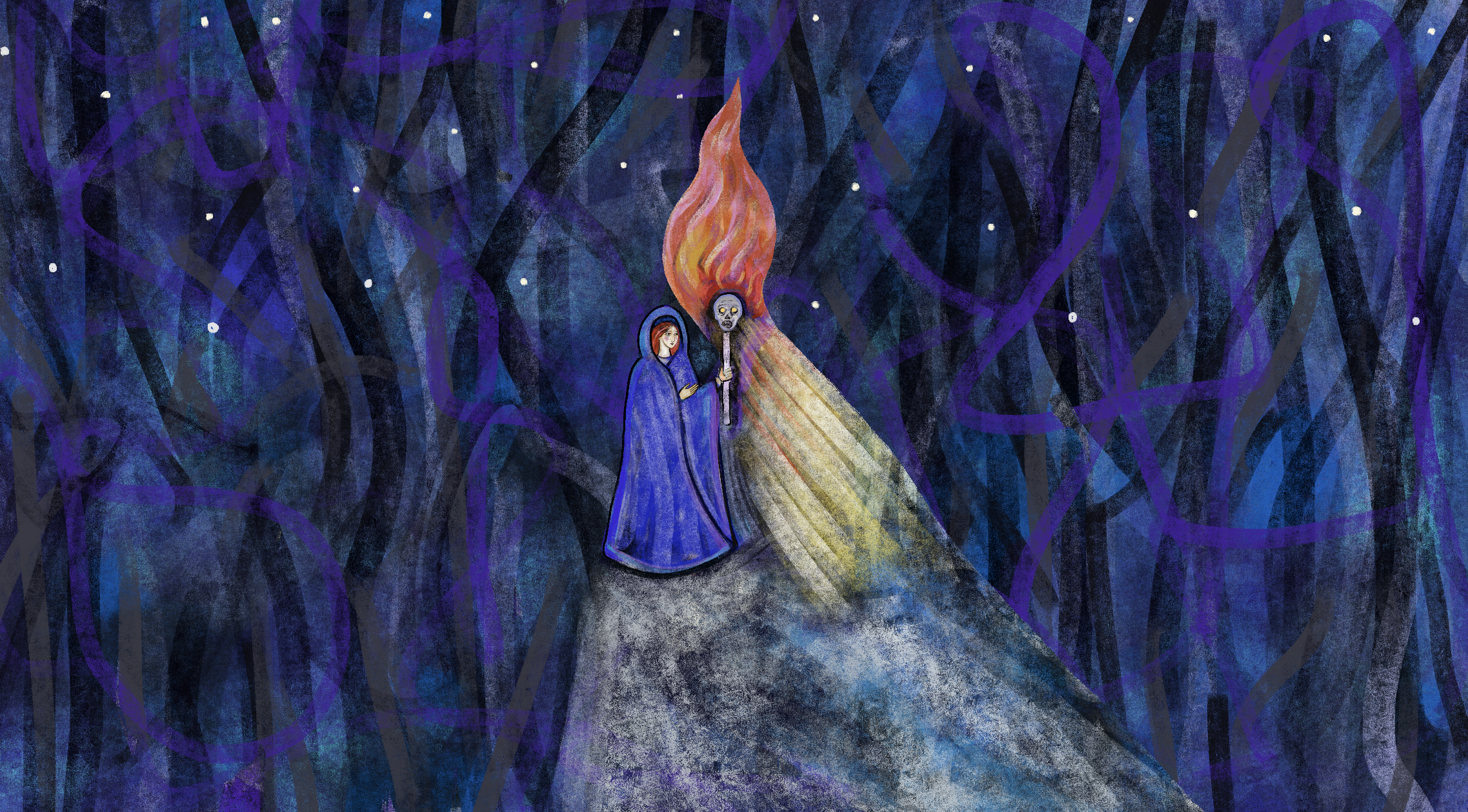
At the heart of this retelling lies the tension between information and wisdom—the recognition that knowledge alone does not lead to true understanding. Vasilisa the Beautiful and Baba Yaga reminds us that genuine guidance emerges when what we know remains connected to what we love. Through Vasilisa’s journey, audiences are invited into a timeless rite of initiation, where the dark forest becomes a place of transformation and Baba Yaga reveals herself as an unexpected teacher.
Vasilisa’s journey carries a profound spiritual image: love can become a guiding presence through darkness, illuminating the path forward and transforming even what was once feared into a source of wisdom and light.
The Performance
Through storytelling, music, movement, and visual imagery, the performance explores enduring questions:
How do we discern the wisdom within?
How do we recognize help when it arrives in unexpected forms?
How do we move forward in trust when we cannot yet see the path?
Vasilisa the Beautiful and Baba Yaga invites audiences into a world where the adversary becomes a catalyst for courage, love becomes a guiding force, and hope in the unseen illuminates the path ahead.
The Creative Journey
This work began with a feeling of being drawn toward Vasilisa the Beautiful and Baba Yaga—a sense that this ancient story carried something needed for our time.
I kept returning to Vasilisa’s journey: her encounter with loss, her descent into the forest, her meeting with the mysterious Baba Yaga, and the quiet forms of guidance that accompany her through the unknown.
The adaptation grew through a weaving of four different streams of the tale: early Slavic tellings, psychological interpretations exploring the symbolic dimensions of the journey, Victorian-era adaptations, and contemporary perspectives. Each version offered a different doorway into the story, revealing new layers of meaning and allowing the tale to continue its evolution.
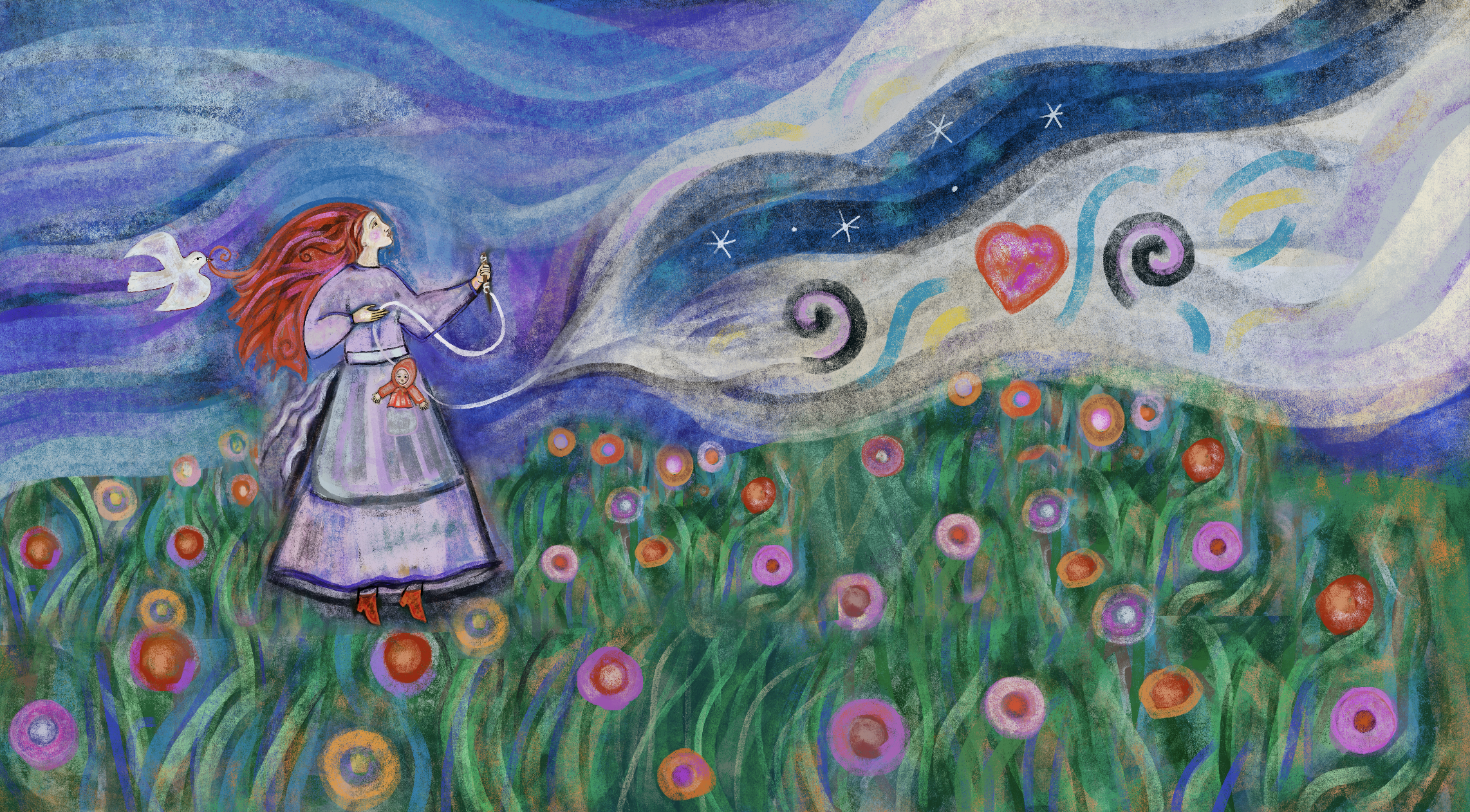
The paintings came first. Through the creative process of painting, the characters, landscapes, and symbolic images began to emerge. These visual explorations became the seeds from which the story adaptation, poetry, and song lyrics grew. The work revealed itself through an interweaving of image, word, and music.
I then brought the work to my creative partner, Kristi Williamson, whose musical gifts opened another dimension of the tale. She composed the melody for Vasilisa’s doll and lends her voice to the narration, bringing warmth, presence, and a new layer of connection to the unfolding story.
Together, we are developing Vasilisa the Beautiful and Baba Yaga as a stage performance that weaves storytelling, music, movement, ritual, and visual art into a shared experience.
We are seeking support to bring this vision fully into form and share this ancient story—renewed through a contemporary artistic lens—with audiences.